
Problems happen on the road.
RVers need backup plans
Since things can (and usually do) stop working, experienced RVers always try to have a lot of backup plans.
Here are some of my backup plans:
-
For heat, I have an onboard propane furnace, two electric heaters, and a Mr. Buddy propane heater. I have two small propane tanks plus the large built-in tank on the RV, and I even keep a few of the small green one-pound propane canisters that will screw onto the Mr. Buddy heater.
Even though I'm in Florida, it's been cold this past week, so having a backup plan for heat has been comforting.
- For electrical power I have three Lithium-ion batteries and a 2,500-watt pure sinewave inverter for electric power. I can charge the batteries from shore power, the RV engine, or a solar panel.
I also have a small inverter I can connect to the 12-volt engine battery if I really get in a bind and need to charge my phone or computer. And, of course, I can also charge my computer and phone from the USB port in my car.
One more backup option is that I have a 6,500-watt generator that will charge batteries and provide 120 VAC.
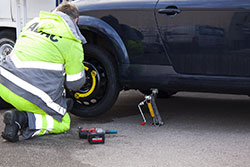
- Tire problems. Of course, I have spare tires for the motorhome, the dolly, and an air compressor. As a backup for tire problems, I have Good Sam's Roadside assistance.
- Misc. I also have extra power cords, water hoses, jumper cables, fuses, tools, and spare parts.
The other backup option that comforts us RVers is that we can get almost anything from Amazon in two days if we need something that's not available from a local Walmart.
Bottom line: If you live or travel in an RV, one thing is for sure—things are going to break or stop working. And, they're going to do it at the most inconvenient time. You have to be prepared if you want to prevent a lot of stress. The longer you've been RVing, the more you're aware of this, and the more you're prepared you are to deal with it when the ship hits the sand, so to speak.