

My Trip to Nicaragua
After three months in Costa Rica, it was time to visit Nicaragua.
I love Costa Rica, but I had to leave and go somewhere. When you cross the border or fly into Costa Rica, your passport is stamped with a 90-day visa.
The purpose of my trip to Nicaragua
Before the 90 days are up, you have to leave the country. Then, you can walk across the border into Panama or Nicaragua, get your passport stamped and walk back across into Costa Rica, and you're good for another 90 days.
It all sounds simple and should take less than three minutes, but when you factor in bureaucracy, the process took me a little over three hours.
Some bureaucracy requirements were impossible to comply with
I had to have a COVID test to prove that I didn't have COVID (even though I had received both of my COVID shots). Unfortunately, the test was only good for 48 hours. I was at the testing place at 6:30 a.m. when they opened, but the test results were not available until 3:00 p.m.
The immigration office was only open until 4:00 p.m. It was three hours away--no way to make it. Simple solution, just go the next day.
But Costa Rica only allows people to drive every other day based on the last digit of their license plate. I couldn't legally drive the next day, and my test would not be valid by the following day. So I drove the day that wasn't legal and didn't get caught.
There were other hoops to jump through and forms to fill out. I had to have proof that I had passed the COVID test within the last 48 hours to get into Nicaragua.
Then to get back into Costa Rica, a COVID test was not required, but they did require that I have proof of insurance that would cover all of my hospital and medical expenses if I did come down with COVID while I was in Costa Rica.
An example of another hoop I had to jump through
I had to fill out a form with my passport number, return flight information, proof of insurance, where I would be staying while in Costa Rica, and some more information. Then the Costa Rica government would email me a QR code.
Then you show this QR code (printed copy or on your phone) to immigration. It all worked fine in the airport three months ago, but when I was crossing the border from Nicaragua back into Costa Rica, the immigration officer said that the code had to be in green and not black. A black QR code was what the government sent me, and it worked fine in the airport.
The immigration officer agreed that they could help me get a green QR code, but there would be a $3 fee if they did that. I paid the $3, and after about 30 minutes, they got me a green QR code, but their computer wouldn't accept it. It took another 30 minutes for them to get a green QR code that would work.
One thing that slowed down the process
I didn't speak a word of Spanish, and no one in the Nicaragua migration office spoke a word of English.
Oh well, it all worked out with enough patience, and I got my passport stamped with a new visa that allows me to stay in Costa Rica until my flight back to the US in late July.
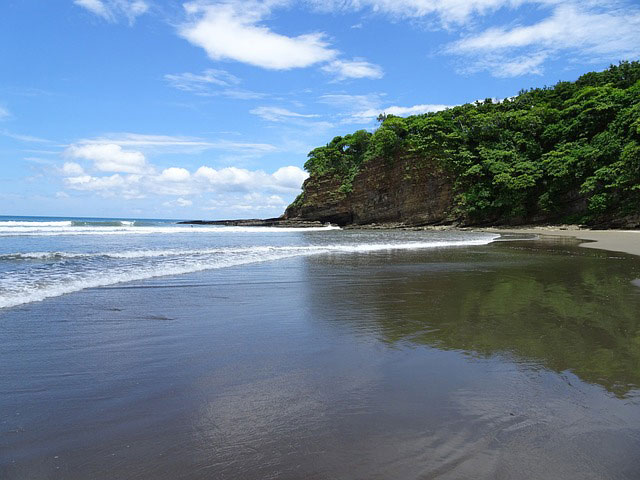
Nicaragua is a beautiful country, but I didn't get to see much of it on this trip. I plan to stay longer the next time I go so I can get to see more of the scenery and experience the culture.
I'm sure this is more than you wanted to know about my ordeal, but believe me, I left out a lot of the details.
Bottom line: When you're in any Latin American country, don't get in a hurry, don't get upset or frustrated, and realize that things will get done when they get done, and no sooner. Nothing you're going to do will speed up the process. Enjoy the adventure. If you expect things to be done like they are in the US, then stay in the US.